Twenty years ago, straightening adult teeth meant metal brackets, painful adjustments and a sharp jump back into your teenage years. Today, most adults — and many teenagers — have a different option: clear aligners.
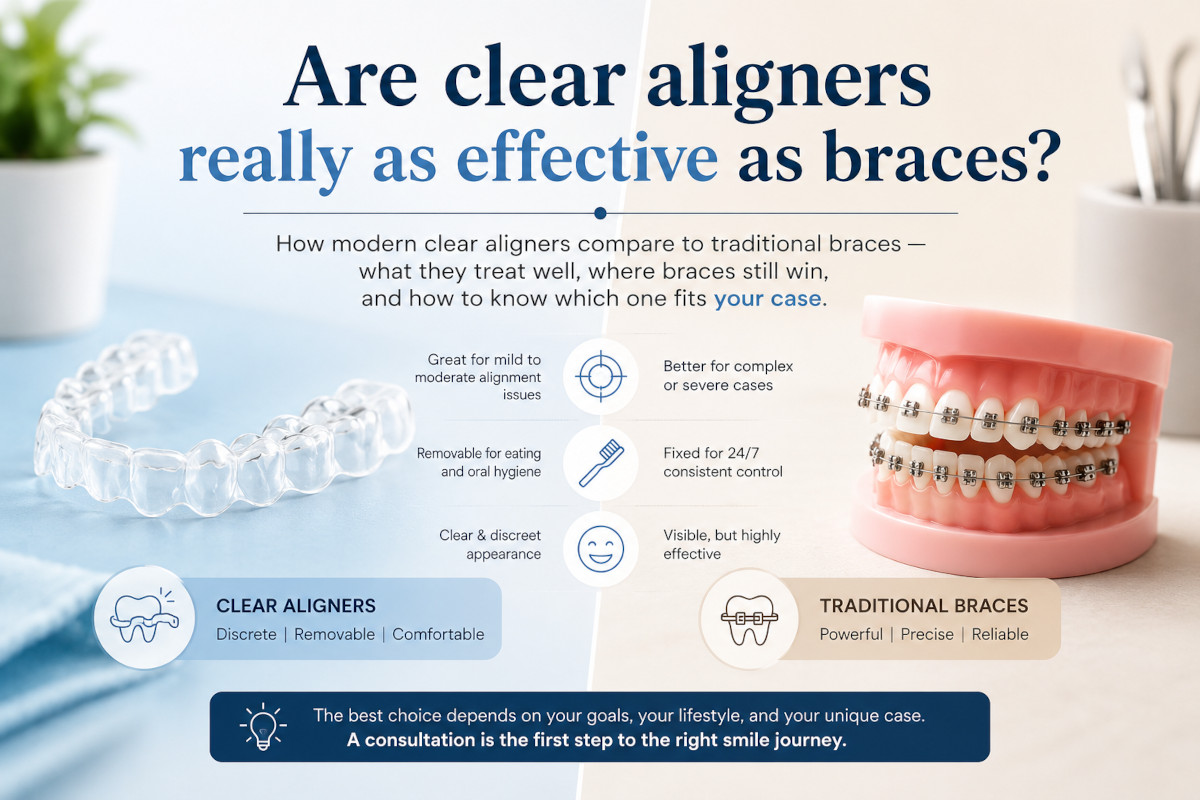
But are they really as effective as braces? The honest answer is: for most cases, yes — and for some cases, no. Here is when each one wins.
What clear aligners do well
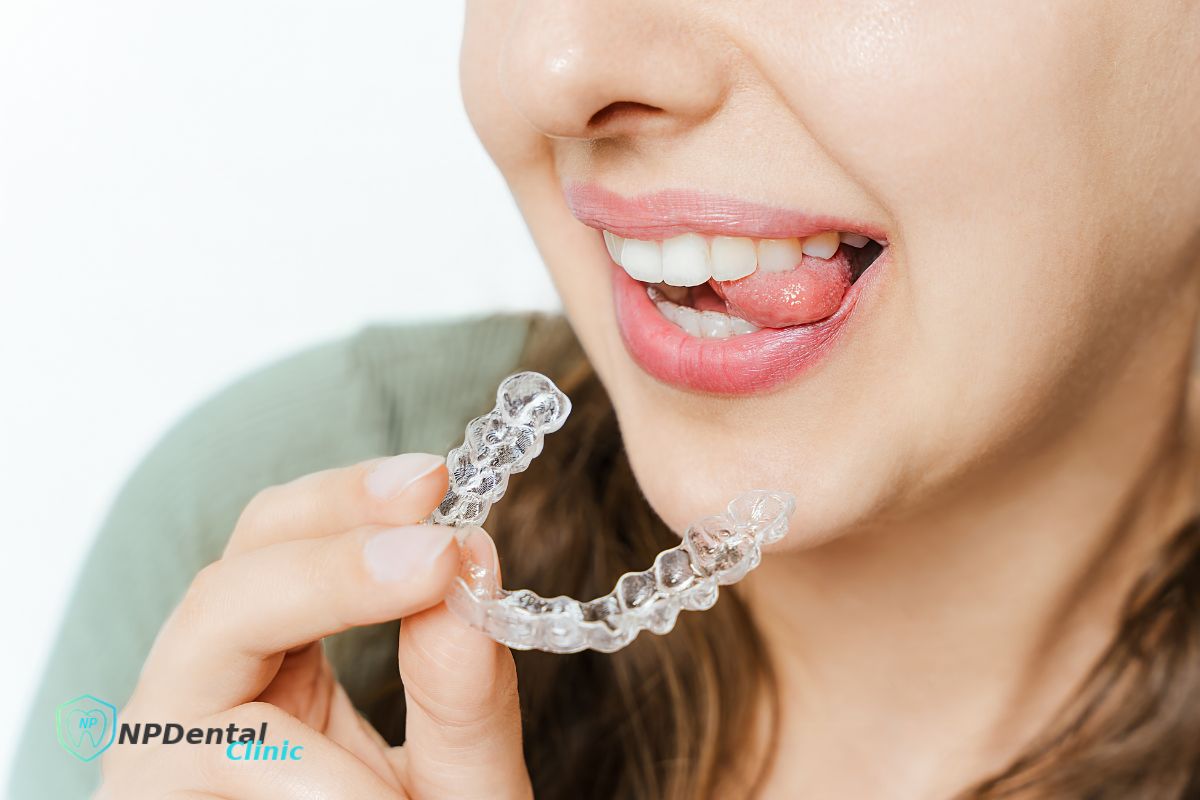
Modern aligner systems are extremely capable. The trays are 3D-printed from a digital scan, and treatment is simulated from start to finish before any aligner is made. They are excellent for:
- Mild and moderate crowding
- Spacing and gaps
- Tipped or rotated front teeth
- Mild crossbite or overbite
- Relapse after old braces
For these cases, aligners deliver results that are clinically equivalent to traditional braces, with two clear advantages: they are almost invisible, and you take them out to eat and brush.
Where braces still win
There are a handful of orthodontic situations where fixed braces remain the more reliable tool:
- Severe rotations of large teeth (canines, molars)
- Complex bite issues that need rigid mechanical control
- Cases where vertical movement of teeth is needed
- Children whose adult teeth are still erupting
An ethical orthodontist will tell you honestly when your case falls into this group. Aligners are a tool, not a magic wand.
Comfort and lifestyle
This is where aligners pull ahead for almost every adult patient.
- Visibility: clear trays are virtually unnoticeable in most lighting.
- Comfort: no metal brackets digging into the inside of your cheek.
- Eating: nothing is off-limits, because the aligners come out at meal times.
- Hygiene: brushing and flossing are completely unchanged from your normal routine.
The trade-off is discipline. Aligners only work if you actually wear them — typically 20–22 hours a day. If you know yourself well enough to commit to that, you will love the experience. If not, fixed braces remove the temptation.
How long does treatment take?
For mild cases, aligner treatment can finish in 4–6 months. Average cases are 9–12 months. Complex cases can extend up to 18 months. Treatment time with braces is broadly similar — they are not faster, despite what some clinics claim.
The biggest predictor of a great result isn’t the brand of aligner. It’s the experience of the orthodontist who designs the treatment plan.
Should you choose aligners?
If your case is mild to moderate, you are an adult or motivated teenager, and you value a discreet treatment, aligners are an excellent choice. If your case is more complex, or you would prefer to “fit and forget”, fixed braces may serve you better.
Either way, the right starting point is a digital scan and an honest conversation with a specialist. We are happy to give you that opinion at no cost.